

About This Image
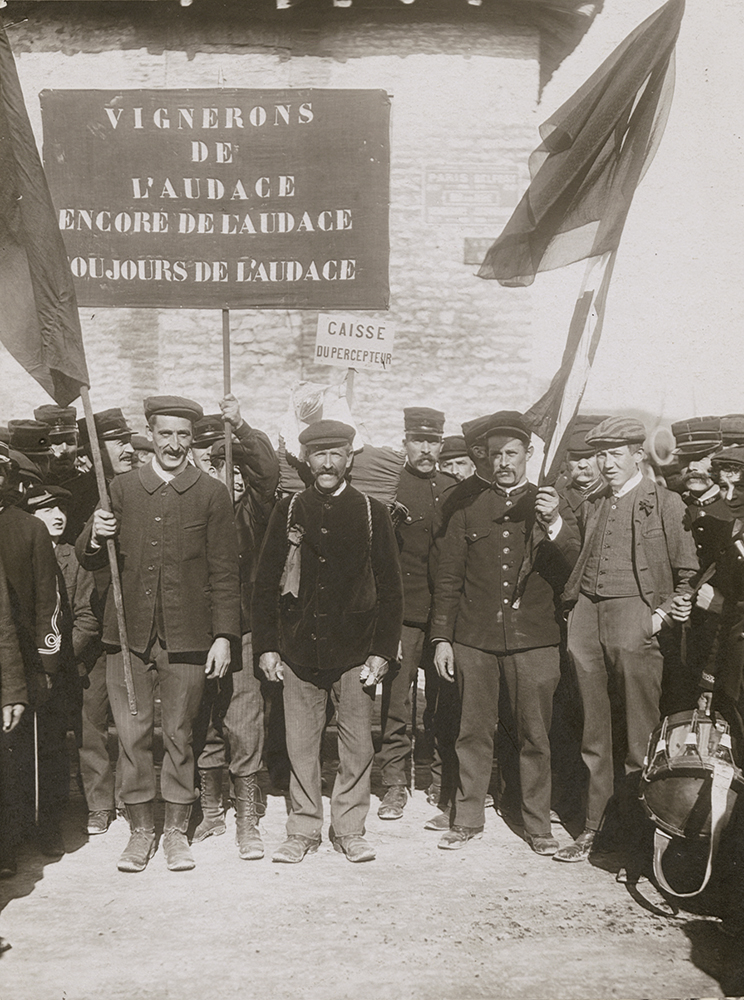
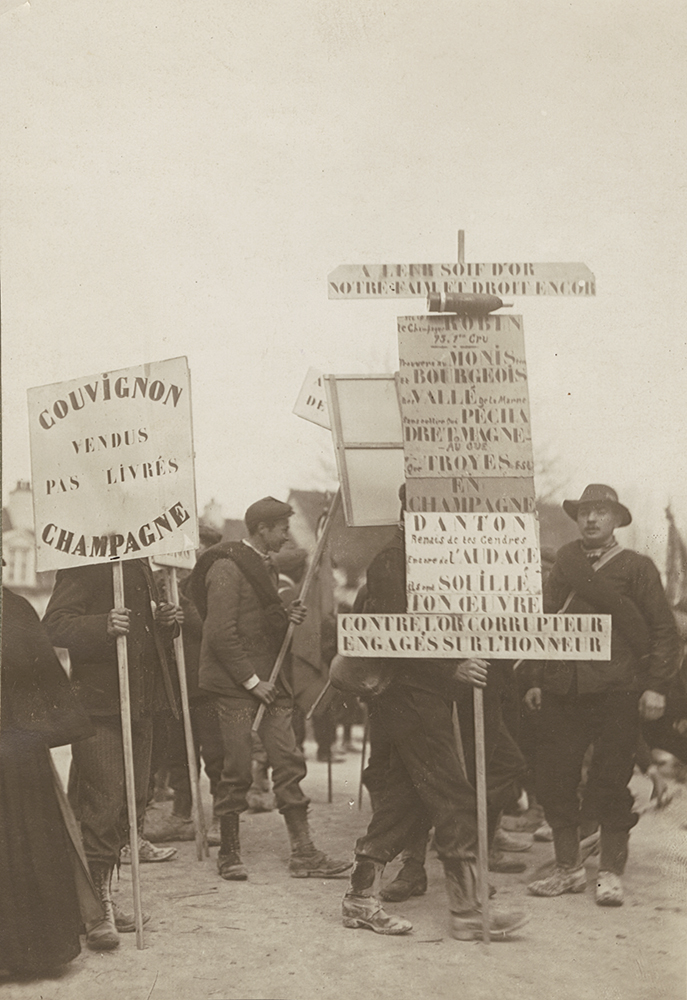
Variously stamped on the verso with some descriptions in pen and pencil. Sizes all similar but some dimensions reversed. Quite a scarce series of images.
The Champagne Riots of 1910 and 1911 resulted from a series of problems faced by grape growers in the Champagne area of France. These included four years of disastrous crop losses, the infestation of the phylloxera louse (which destroyed 15,000 acres (6,100 ha) of vineyards that year alone), low income and the belief that wine merchants were using grapes from outside the Champagne region. The precipitating event may have been the announcement in 1908 by the French government that it would delimit by decree the exact geographic area that would be granted economic advantage and protection by being awarded the Champagne appellation. This early development of Appellation d'Origine Contrôlée regulation benefitted the Marne and Aisne districts to the significant exclusion of the Aube district, which included the town of Troyes—the historic capital of the Champagne region.
In January 1911, frustrations reached boiling point as riots erupted along the towns of Damery and Hautvilliers. Champenois vine growers intercepted trucks with grapes from the Loire Valley and pushed them into the Marne river. They then descended upon the warehouses of producers known to produce these faux Champagne, tossing more wine and barrels into the Marne. The owner of Achille Perrier found his house surrounded by an angry mob chanting "A bas les fraudeurs" (Down with cheaters). He was able to escape harm by hiding in the home of his concierge.
The height of the violence was experienced in the village of Aÿ, located three miles northeast of Épernay. The history of Aÿ has been intimately connected with the pride and prestige of the Champagne region. In the 16th century, King Francis I was fond of calling himself the "Roi d' Aÿ et de Gonesse"—King of the lands where the country's greatest wines and flour were produced. Such was the reputation of the wines of Aÿ that they were known as the vins de France, their quality representing the whole of the country rather than just a region. Eventually the name of Aÿ became a shorthand term to refer to all the wines of the Champagne region. (Much like Bordeaux or Beaune is used today to refer to the wines of the Gironde and Burgundy regions, respectively].
As the mob descended upon the city little was spared. Homes of private citizens as well as Champagne house producers were pillaged and ransacked. Somewhere a fire was started that spread throughout the city. The regional governor sent an urgent telegraph to Paris requesting assistance stating "We are in a state of civil war!" By sunrise the entire village of Aÿ was burning.[4] To quell the violence, the French government sent over 40,000 troops to the region—setting up a billet in every village.
The relationship between the growers and Champagne producers was not the only source of tension. Within the Champagne region itself there was civil discontent among neighbors as to what truly represented "Champagne". The French Government tried to answer the vine growers concerns by passing legislation defining where Champagne wine was to come from. This early legislation dictated that the Marne department and a few villages from the Aisne department were the only areas approved to grow grapes for Champagne production.
The glaring exclusion of the Aube region, where Troyes, the historic capital of Champagne, is located, promoted further discontent as the Aubois protested the decision. The Aube, located south of the Marne, was closer to the Burgundy region in terms of soil and location. The growers of the Marne viewed the region as "foreign" and not capable of producing true Champagne but the Aubois viewed themselves as Champenois and clung to their historical roots.
Protest erupted from growers in the Aube district as they sought to be reinstated as part of the Champagne region. The government, trying to avoid any further violence and disruption, sought a "compromise solution" by designating the department as a second zone within the Champagne appellation. This provoked the growers in the Marne region to react violently to their loss of privilege and they lashed out again against merchants and producers who they accused of making wine from "foreign grapes"—including those from the Aube. Thousands of wine growers burned vineyards, destroyed the cellars of wine merchants, and ransacked houses as hundreds of liters of wine were lost.[6] The government was once again going back to the drawing-board in search of a solution to end the violence and appease all parties. Negotiations among vine growers, producers and government officials was ongoing when World War I broke out and the region saw all parties united in defense of country and the Champagne region.
Most U.S. domestic Fed Ex ground shipping (Media Mail for books) will be a flat $25 charge except for larger and heavier items, or unless the buyer wants express shipping (email us your requests for the latter). International shipping and insurance costs will be added to the price and must be paid for by the buyer. Pennsylvania buyers must pay appropriate local sales tax. International clients are responsible for their local customs duties and taxes, which will be charged by Fed Ex, which will contact the client prior to delivery.


Price 1,500.00
Sale Price $1,200
Additional Images
Ref.# 15880
Medium Nine silver prints
Mount unmounted
Photo Date 1911 Print Date 1911
Dimensions 6-1/2 x 4-1/2 in. (165 x 114 mm)
Photo Country France
Photographer Country France
Contact
Email info@vintageworks.net
Phone +1-215-518-6962
Company
Contemporary Works / Vintage Works, Ltd.


Share This