

MIA Photo Fair BNP Faribas: Milan’s Photo Fair Undergoes Metamorphosis
Interview: Ettore Molinario, Italian Collector with a Live-in Museum
Interview: Vladimír Birgus, Czech Photographer and Photohistorian
Noted 19th-century Photo Dealer and Expert Robert Hershkowitz Passes away
Make an Appointment with Us during AIPAD
Met Museum of Art Appoints Oluremi C. Onabanjo as Photography Curator
Book Review: PAPER PRINTERS PRINTING – Photographs from the Collection of Barry Singer
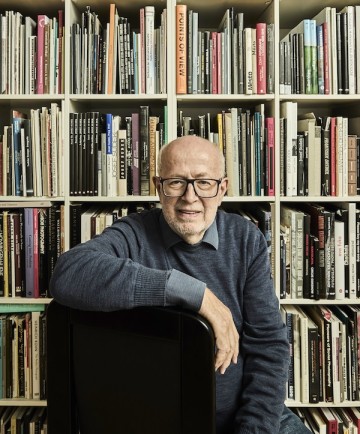
Vladimir Birgus (Photo by David Turecky)
The Czech photographer Vladimir Birgus first gained renown with his black and photographs. At the turn of the 1970s and 1980s, he started photographing in to color, quickly gaining a reputation as a master. But Birgus is not just a photographer. He is also a curator, educator and photo historian. In addition to books about his own photographs, he has published numerous books on Czech and European photography, including important monographs on Jaroslav Rössler, František Drtikol and Eugen Wiškovský.
I started my conversation with Vladimir Birgus by asking about his early years and where he grew up.
"I grew up in Příbor, a small historic town in northern Moravia, where Sigmund Freud was born 98 years before me. It was a peaceful childhood in an old house with a large garden. My father taught at the university in Olomouc and my mother was a teacher at the local elementary school. My brother, who was thirteen years older than me, studied medicine in Olomouc, and my sister, eleven years older than me, studied philology in Prague, so we were only together on weekends and holidays."
Did you have an early interest in the arts?
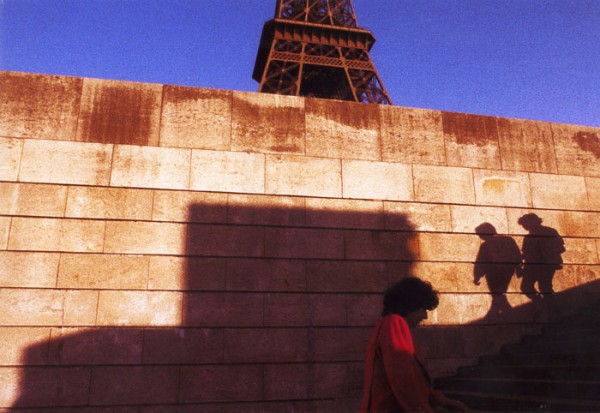
Vladimir Bigus, Paris, 1990, Chromogenic print.Available in 12 x 18 in. edition of 30, plus A.P., currently at $2,250; and 30 x 40 in. edition of 10, plus A.P., starting at $3,500.
"Yes, mainly thanks to my brother, who was very interested in art. He bought monographs by famous artists and showed them to me. I remember how much I liked the books about Vincent van Gogh and Edvard Munch. We had only one artist in our extended family, my grandmother's sister, who studied painting at the Academy of Fine Arts in Vienna."
And photography?
"Already in elementary school, I attended a photography club, which was excellently led by Rudolf Jarnot, a local amateur photographer. From the age of ten, I devoted myself intensively to photography, sent my work to various competitions for young photographers, and later, as a student at a high school in Olomouc, I prepared photography exhibitions for a small local gallery. It was possible to present work there that for ideological reasons would not have been accepted in larger official galleries in communist Czechoslovakia. Towards the end of my high school studies, I began commuting to Prague to attend the People's School of Art, where Professor Ján Šmok taught in the photography department. He also headed the Department of Photography at FAMU, the well-known Film and Television Faculty of the Academy of Performing Arts in Prague. I learned a lot there and made many friends, whom I still have today."
You had your first photo exhibition pretty early on. What year was it? And what did you show?
"Yes, I had my first solo exhibition at the age of seventeen in 1971. I exhibited staged photographs, often influenced by the strong wave of highly symbolic, staged photography in Czech photography at the time. Only a few of my photographs from that period have stood the test of time."
I saw in your chronology that you enrolled in the Literature, Theatre, Film program at Palacký University in Olomouc, as well as the Department of Photography at FAMU in Prague. It is evidence of a very strong curiosity. Can you tell me a little about those classes?
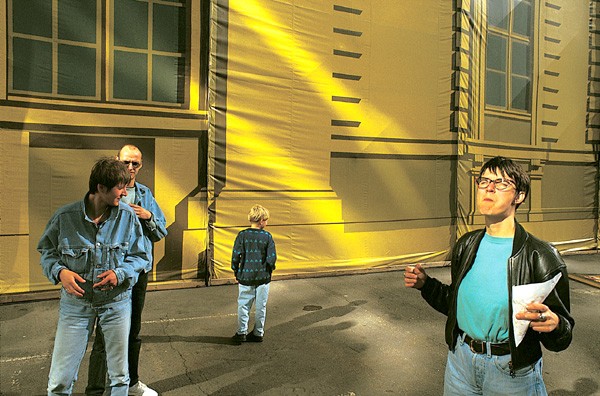
Vladimir Bigus, Berlin, Chromogenic print. Available in 12 x 18 in./edition of 30, plus A.P., starting at $2,500; and 30 x 40 in. edition of 10, plus A.P., starting at $3,500.
"When I was accepted to study photography at the FAMU Department of Photography, I had already completed a year of study at the Faculty of Arts at Palacký University in Olomouc. I enjoyed it so much that I didn't want to leave. Fortunately, it was possible to arrange for me to study at both schools simultaneously. So once or twice a week, I took the 5:40 a.m. train from Olomouc to Prague, where I attended lectures and seminars at FAMU, and on other days I studied at the university in Olomouc. In both cases, I was incredibly lucky with my teachers. Even during the Communist era, Professor Šmok managed to create a kind of island of freedom at the FAMU Department of Photography, where even the children of dissidents could study, where it was possible to speak freely, and where everyone could create and exhibit their work at school without censorship. But even in Olomouc, many teachers lectured us on the works of émigrés such as film director Miloš Forman and writer Milan Kundera. Of course, these were really exceptions at universities in what was then Czechoslovakia. To this day, I am very grateful that I experienced both."
In retrospect, what impact did those years have on you?
"Above all, the realization that, even in such difficult times, when so much was forbidden and so little was allowed, it was possible to act and speak more freely than it seemed at first glance. But it took a little courage."
In the years that followed, what kind of work did you produce?
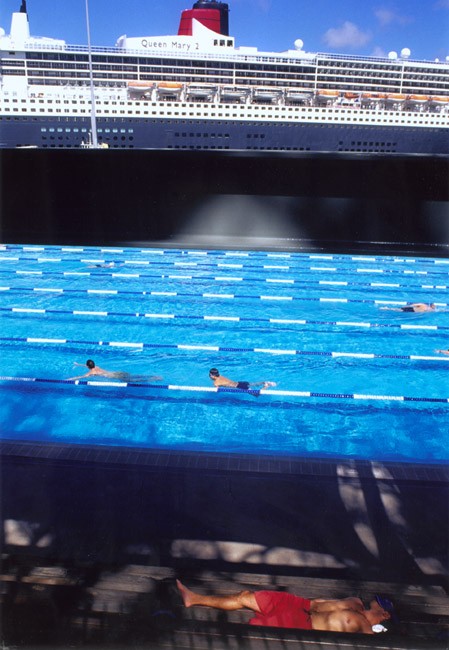
Vladimir Birgus: Sydney. Chromogenic print, 17-7/8 x 11-3/4 in. (454 x 298 mm), 2007/2007, unmounted. Signed, titled, dated and editioned. Available in 12 x 18 in./edition of 20, plus A.P., starting at $1,250; and 30 x 40 in. edition of 10, plus A.P., starting at $3,000.
"I moved from staged photographs to documentary photography. I photographed various social issues, such as life in retirement homes, and also took more subjective snapshots of lonely people in big cities. I also began to take an ironic look at various communist celebrations, such as the monstrous May Day celebrations and the anniversary of the communist coup in Czechoslovakia in 1948. I was interested in the contrast between the official propaganda and the ordinary people who were given flags to wave so that they wouldn't have problems at work or so that their children could get into college. With the exception of true communist enthusiasts, these were people whose faces showed indifference and resignation. Almost no one is smiling in those photographs. I had the advantage of not being a photojournalist for the official press so I could take pictures just for myself and for the future. Occasionally, secret police officers forced me to destroy exposed film, and a few times I had to go with them for questioning, but most of the time I was saved when I proved that I was studying or teaching at the Department of Photography at FAMU and taking photographs for the school."
Did you exhibit those photographs anywhere?
"With a few exceptions, I never exhibited these photographs, only showing some of them to friends, usually somewhere in a pub. I enlarged many of the negatives almost forty years after they were taken for exhibitions at the Month of Photography Festival in Bratislava, the Silesian Museum in Katowice, and the Museum of Decorative Arts in Prague, and for the book So Much, So Little, published in 2019 by KANT in Prague. It also included a number of other photographs from life in what was then Czechoslovakia, Poland, the Soviet Union, Bulgaria, and other countries of the Soviet bloc. I photographed the devastation of the environment and people under totalitarian regimes. The sadness of life without freedom. And I tried to seek out ghostly moments of contrast between different parallel events, people, and environments that would have a symbolic meaning open to personal interpretation by viewers. The artistic aspect was also important, with compositions often far removed from the usual patterns. And even though most of my photographs came across as pessimistic and depressing, in some photographs I also showed that, even under totalitarianism, people knew how to enjoy themselves, spending weekends with their families at cottages and cabins, going out for beer with friends, or cheering on their favorite soccer team."
Was all that work black and white?
"Yes, the vast majority of my photographs depicting life under communist totalitarianism were black and white. This better reflected the dominant gray of reality at the time. I only used color film when color played a truly significant role and enriched the images with an additional dimension. This was the case, for example, with some of my photographs from Kyrgyzstan from 1981, which I still exhibit from time to time."
Were there particular photographers that influenced you at that point?
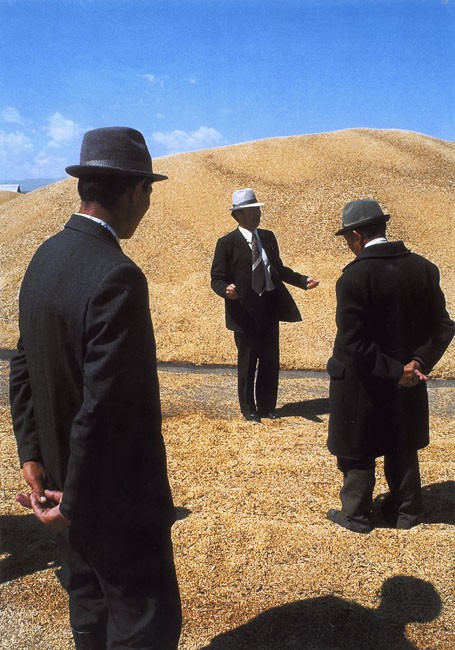
Vladimir Birgus: Kirghizia. Chromogenic print, 17-7/8 x 11-3/4 in. (454 x 298 mm), 1981/2007, unmounted. Available in 12 x 18 in./edition of 20, plus A.P., starting at $1,250; and 30 x 40 in. edition of 10, plus A.P., starting at $3,000.
"At that time, the representatives of humanistic photojournalism André Kertész, Henri Cartier-Bresson, and Werner Bischof were very popular in Czechoslovakia, whose monographs had been published in Prague since the late 1950s. But I mainly admired the pioneers of a more subjective and raw approach to documentary photography, William Klein and Robert Frank. I knew their work mainly from books, but I later got to know William Klein better when I prepared a large exhibition for him in 1994, which was presented at Prague Castle and the Slovak National Gallery in Bratislava. I had been warned in advance that working with him would be difficult, but I really couldn't complain; Klein was friendly and accommodating to me. This was probably helped by the fact that President Václav Havel came to his exhibition and provided Klein and his wife with accommodation in an apartment for distinguished guests right at Prague Castle. Other photographers whose work I admired during my studies and still admire today are Diane Arbus and Richard Avedon."
In 1977, you formed the group Dokument. Can you tell me about the group, its philosophy and how it operated? The aim of the photography it produced?
"In 1977, we founded the Dokument group with two young photographers, Petr Klimpl and Josef Pokorný. We wanted to work together on larger projects. At first, we tried to photograph in the style of "undecisive moments" consciously emphasizing the undramatic, authentic, and descriptive nature of photography. Following the example of portraits by August Sander and Diane Arbus, we mainly photographed people standing or sitting in a specific, significant environment, looking directly into the lens, and, through it, into the eyes of the viewers. And because we felt that too many photographers were depicting children or old people, we wanted to create an extensive sociological collection about people of working age. In the end, however, we only realized a small part of it. But gradually we abandoned our strict adherence to it and began to prefer a more subjective approach. We also began working individually on our own photographic projects. In the second half of the 1980s, we tried to revive the group with several exhibitions, but this was not very successful. We remained friends, however."
What was the photography community like in Czechoslovakia in the 70s and 80s?
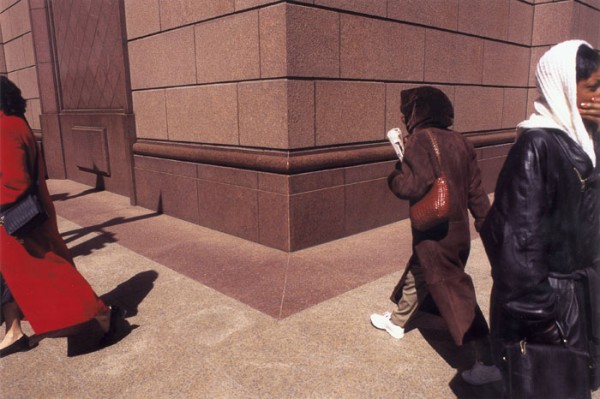
Vladimir Birgus: Chicago. Chromogenic print, 11-3/4 x 17-7/8 in. (298 x 454 mm), 1998/2007, unmounted. Available in 12 x 18 in./edition of 20, plus A.P., starting at $1,250; and 30 x 40 in./edition of 10, plus A.P., starting at $3,000.
"Photography enjoyed relatively good standing in Czechoslovakia. The first photography gallery in Europe was established in Prague in 1957, and from 1958 onwards, monographs by many world-renowned and Czech photographers were published in the Art Photography series. Photography could be studied at FAMU in Prague from 1960 onwards, and the magazine Revue Fotografie was of excellent quality in the 1970s, when Daniela Mrázková was its editor-in-chief. Josef Sudek, who had an international reputation and was a role model for many photographers, was still alive and working until 1976. Unlike film or literature, photography was not the main focus of communist ideologues. After the period of the harshest communist totalitarianism between 1948 and 1956, when the official creative direction was so-called socialist realism, several trends developed side by side. Easily readable humanistic reportage and documentary photography, inspired mainly by the work of Magnum agency members or, indirectly, by Steichen's exhibition The Family of Man, was well represented."
Were there other approaches at the time?
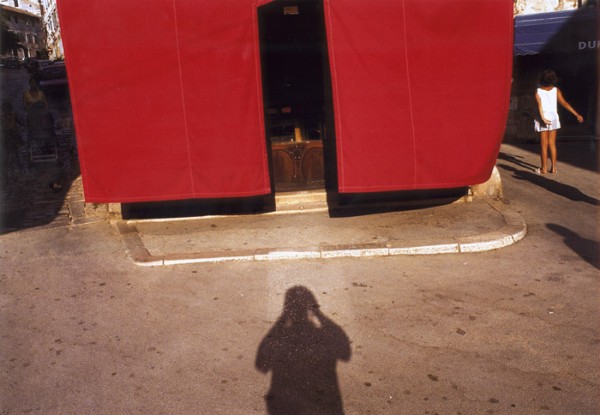
Vladimir Birgus: Rovinj, Croatia. Chromogenic print, 11-3/4 x 17-7/8 in. (298 x 454 mm), 1993/2007, unmounted. Available in 12 x 18 in./edition of 30, plus A.P., currently at $2,250; and 30 x 40 in./edition of 10, plus A.P., starting at $3,500.
"A more subjective approach to documentary photography was already apparent in the work of some documentary photographers, such as Josef Koudelka, who lived in exile in the 1970s and 1980s, Viktor Kolář, and Jindřich Štreit. Much of the artistic photography that followed on from the interwar avant-garde developed mainly the influences of surrealism and abstract art. Today, the works of Běla Kolářová, Emila Medková, and Jan Svoboda, for example, are internationally renowned. Staged photography also had a strong position, represented first by Jan Saudek and later in various forms by Ivan Pinkava or postmodernist-oriented Slovak students of FAMU from the so-called Slovak New Wave. Intermedia art, represented by Vladimír Židlický and Michal Macků, and in Slovakia, mainly by Milota Havránková, brought back various interventions in negatives and positives, as well as the fusion of photography with painting or drawing. Representatives of land art, body art, happenings, and performances mostly remained outside the official sphere, for whom photography served mainly as a record of their time-limited events. And then, of course, there were entire areas of applied photography, in the fields of advertising and fashion, which lagged far behind Western models. There was also amateur photography, which was very diverse in quality but numerically well represented, with its own organization and various photo clubs, educational courses, competitions, and exhibitions. At that time, top amateur photographers contributed much more to the quality of Czech and Slovak photography than they do today."
The Prague Spring started on January 5, 1968 and effectively ended on August 20, 1968, when Soviet forces invaded the country. I have interviewed other photographers who grew up in the former Eastern Bloc, who told me about the difficulties they faced in terms of censorship and surveillance. What was your experience?
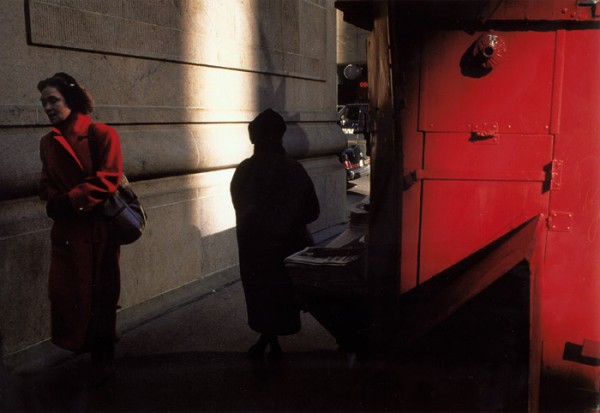
Vladimir Birgus: New York. Chromogenic print, 11-3/4 x 17-7/8 in. (298 x 454 mm), 1995/2007, unmounted. Available in 12 x 18 in./edition of 20, plus A.P., currently at $1,750; and 30 x 40 in./edition of 10, plus A.P., starting at $3,000.
"The occupation of Czechoslovakia in August 1968 put a bloody end to hopes for "socialism with a human face" and greater freedom. Under the banner of "normalization," communist totalitarianism was restored. While many photojournalists working for the official media bowed to ideological demands, documentary photographers who were not dependent on commissions, such as Jindřich Štreit, Viktor Kolář, Jaroslav Kučera, Dana Kyndrová, Bohdan Holomíček, Libuše Jarcovjáková, Markéta Luskačová, Karel Cudlín or Václav Podestát, had far greater creative freedom in creating a true picture of their time. I was one of them. Occasionally, I managed to exhibit my photographs in smaller galleries or alternative spaces. My attempt to publish a larger number of photographs in a book did not turn out well. In 1982, Pavel Jasanský and I prepared a book called City (Město), which was printed, but all ten thousand copies were destroyed for ideological reasons. Two years later, a new version was published, in which Miroslav Hucek replaced a number of "problematic" photographs with more optimistic ones.
"However, I never experienced any real harsh persecution because of my photographs, only a series of police interrogations and one night in prison in Bulgaria, where I was considered a spy, having photographed their borders. But my friend Jindřich Štreit, now one of the most famous Czech photographers, spent three months in prison in 1982 and was then given a ten-month suspended sentence and lost his job as a teacher for photographs that allegedly ridiculed the president and subverted the republic."
As I understand it, rather than working as a photographer for newspapers and magazines, or shooting for the advertising industry, you went into academia and the education sector. Was it a big decision? And why did you make it?
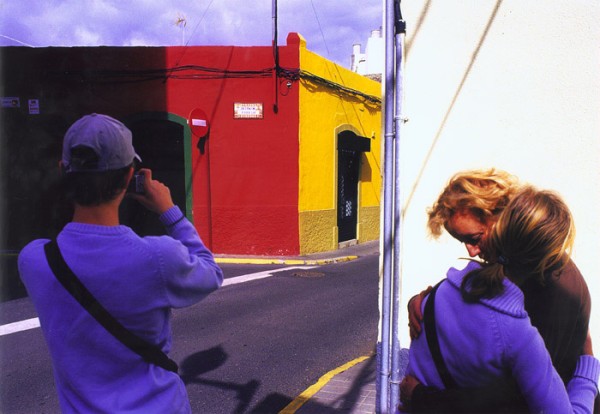
Vladimir Birgus: Telde, Spain. Chromogenic print, 11-3/4 x 17-7/8 in. (298 x 454 mm), 2006/2007, unmounted. Available in 12 x 18 in./edition of 20, plus A.P., starting at $1,250; and 30 x 40 in./edition of 10, plus A.P., starting at $3,000.
"It wasn't a difficult decision. Shortly before I finished my university studies, in the summer of 1978, Professor Ján Šmok asked me if I would like to teach at the Department of Photography at FAMU in Prague. Of course I wanted to. But it wasn't an easy start because I was put in charge of the senior class, where all the students were older than me. Fortunately, they accepted me, and I am still friends with some of them today. I considered the fact that I didn't have to work for newspapers and magazines a huge advantage. I could photograph whatever I wanted and didn't have to worry about whether my pictures were ideologically suitable for publication in the press at the time. The Department of Photography at FAMU also had an exceptionally liberal and friendly atmosphere at the time, incomparable even to some other departments at the same school. A number of very talented people studied there, such as Tono Stano, Miro Švolík, Libuše Jarcovjáková, and others. I never joined the Communist Party, so for many years I could only teach part-time for minimum wage and had to earn extra money by photographing postcards."
I often think of cinema when I look at your images?
"I am a huge fan of quality films. I have always been interested in the visual aspect. I have definitely been inspired by many films in my photography."
Were there particular film directors that had an impact on you?
"First and foremost, it was Michelangelo Antonioni. His film Blow-Up probably influenced many photographers around the world at that time. I was also strongly impressed by his inventive use of color in the films Red Desert and Zabriskie Point. But I also admired the films of Miloš Forman, Ingmar Bergman, Luchino Visconti, Martin Scorsese, Andrzej Wajda."
When and why did you start working in color?
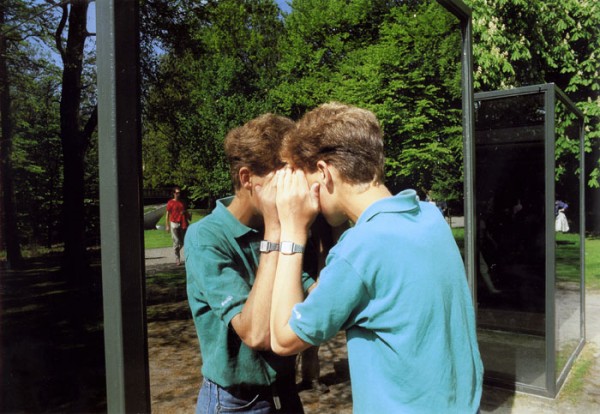
Vladimir Birgus: Otterlo, Netherlands. Chromogenic print, 11-3/4 x 17-7/8 in. (298 x 454 mm), 1988/2007, unmounted. Available in 12 x 18 in./edition of 20, plus A.P., starting at $1,250; and 30 x 40 in./edition of 10, plus A.P., starting at $3,000.
"It was at the turn of the 1970s and 1980s. At that time, it was not customary in Czechoslovakia to use color in documentary photography; it was more common in art-oriented work, advertising and fashion photography or in travelogues. I created color photographs in parallel with black-and-white documentary photography, which was more suitable for shots of life under communism due to its rawness. For many years, I often carried two cameras with me, one with black-and-white film and the other with color reversal film."
I haven't seen all your work but it seems to me that you have had color periods, red, blue, green. Can you tell me what those colors mean to you?
"I try to make color a prominent feature. As we know, every color has a certain symbolic meaning, which I naturally make use of. Initially, I emphasized strong contrasts between several saturated colors, but gradually I often moved on to almost monochromatic photographs with different shades of one color or subtle confrontations between two colors. In 2024, I had an exhibition at the Leica Gallery Prague, one part of which consisted of photographs dominated by blue, and the other part by red. Large areas of a single color contribute to the images acquiring unreal elements that resemble abstract painting rather than a picture of reality. Even though I do not manipulate the depicted reality in any way and limit my work in Photoshop to minimal technical adjustments."
The images are for the most part, populated, even if they're just shadows of people. I haven't spotted any landscapes. Why do you focus on populated areas?
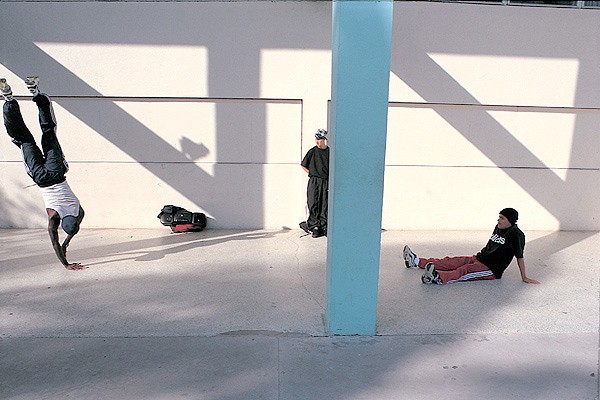
Vladimir Birgus: Miami Beach. Chromogenic print, 11-3/4 x 17-7/8 in. (298 x 454 mm), 1999/2008, unmounted. Available in 12 x 18 in./edition of 20, plus A.P., starting at $1,250; and 30 x 40 in./edition of 10, plus A.P., starting at $3,000.
"Most of my photographs are taken in large cities, where I am interested in the theme of human loneliness in the midst of an anonymous crowd. I often depict situational moments in which a character is separated from the others. They have a kind of Moloch-like tone. In the old black-and-white photographs of life in the Soviet bloc countries, the specific place where they were taken was important, even though they shared a similar atmosphere. In the newer color photographs, I don"t consider it very important whether they were taken in Barcelona, New York, Miami, Munich, or Prague. Their themes are more general, they cannot be clearly translated into words, and I deliberately try to leave various possibilities for interpretation to the viewers' imagination. In confrontations between people and their environment and in the counterpoints of various coexisting events, I look for moments when the real connects with the surreal. I don't like it when everything can be put into words. I think photographs should have a certain mystery. I admire Chekhov's plays, Hemingway's short stories, and Antonioni's films, in which people mostly write or talk about banalities, and the deeper meaning is hidden in the subtext. That is why my endless series is called Something Unspeakable. In addition to photographs dominated by people, I am increasingly photographing details of interiors or seemingly banal motifs, such as abandoned towels on the beach. But even in these, I try to apply my own perspective and metaphorically show something of my own feelings."
Do you shoot a lot and then edit down to a final image?
"It varies. Some shots are taken as spontaneous snapshots, while other times I find a setting and wait there for a long time for the ideal light and the confrontation of various parallel events or the placement of characters and their shadows."
Has your approach changed in recent years?
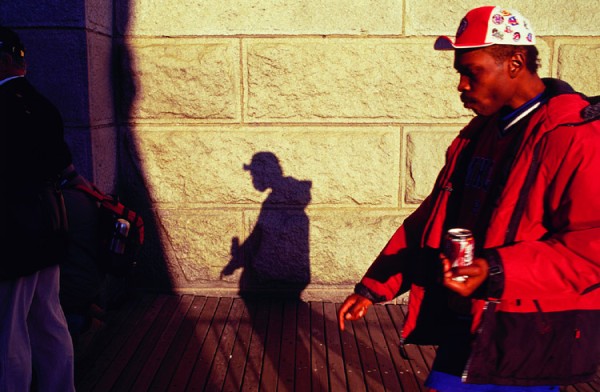
Vladimir Birgus: Brooklyn, NY. Chromogenic print, 30 x 40 in. (762 x 1016 mm), 2006/2008, unmounted. Signed, titled, dated and editioned. Available in 12 x 18 in./edition of 20, plus A.P., starting at $1,250; and 30 x 40 in. edition of 10, plus A.P., starting at $3,000.
"In recent years, in addition to photographs dominated by people, I have been increasingly photographing significant details of interiors or seemingly mundane motifs, such as abandoned towels on the beach. In these, too, I try to find a certain symbolism and metaphorical meaning. And completely outside of my subjective documents, for over forty years I have been taking purely descriptive portraits of my wife and children, various relatives, friends, and classmates at different intervals. These are images of the relentless passage of time, which leaves its mark on human faces. I realize that many similar series have already been created, and probably none of them can match Nicholas Nixon's The Brown Sisters series. But I would like to publish my own series someday."
I believe you had your first exhibition in the west at Canon Gallery, Amsterdam, in 1985.
"Yes, Lorenzo Merlo, then director of the Canon Photo Gallery in Amsterdam, saw my photographs of life in the Soviet Union somewhere and organized a solo exhibition for me at his gallery. During my stay in Amsterdam, I met a number of Dutch photographers and curators, which, in the following years led to an exchange of exhibitions and students between FAMU in Prague and the Gerrit Rietveld Academie in Amsterdam, as well as to many articles about photographers from Central and Eastern Europe in magazines such as Focus, Professionale Fotografie, and Reflexions, and to several Czech exhibitions at the then very important Holland Foto festival. The largest one, entitled Contemporary Czechoslovak Photography, which we prepared with Miroslav Vojtěchovský, was presented in the fall of 1989 at the Nieuwe Kerk coronation church, alongside exhibitions by Arnold Newman and Herb Ritts."
How difficult was it to organize exhibitions of Czech and Slovak photography in West European or American museums and galleries?
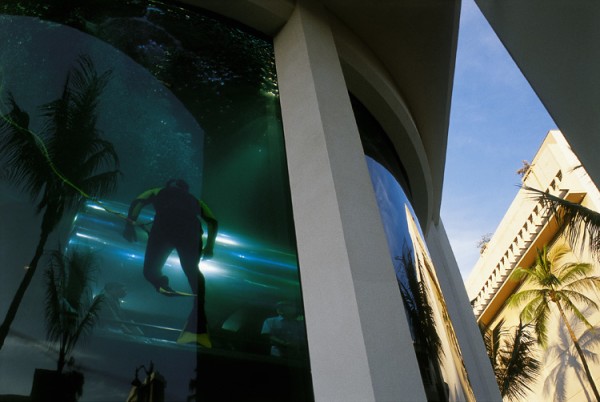
Vladimir Birgus: Honolulu, HA. Chromogenic print, 11-3/4 x 17-7/8 in. (298 x 454 mm), 2001/2008, unmounted. Signed, titled, dated and editioned. Available in 12 x 18 in./edition of 20, plus A.P., starting at $1,250; and 30 x 40 in. edition of 10, plus A.P., starting at $3,000.
"It was primarily a matter of personal contacts. For example, photography historians Antonín Dufek, Anna Fárová, Jaroslav Anděl, Petr Tausk, and Daniela Mrázková had already collaborated in the 1970s and 1980s with various foreign curators on preparing exhibitions of Czech photographers for such important institutions as the Centre Pompidou in Paris, the Museum Folkwang in Essen, The Photographers' Gallery in London, the Kunsthaus in Zurich, and The Museum of Fine Arts in Houston. Of course, this would not have been possible without the cooperation of various institutions, primarily the Museum of Decorative Arts in Prague and the Moravian Gallery in Brno, owners of the two most important collections of Czech photography.
"A brief wave of Western interest in art from Czechoslovakia, Poland, Hungary, and the German Democratic Republic arose after the fall of the Berlin Wall. Coincidentally, we had an extensive exhibition of contemporary Czechoslovak photography ready at that time. It actually came about by chance. In 1989, I met Reinhold Misselbeck, then head of the photography collection at the Museum Ludwig in Cologne, at a photography symposium in Poznań, Poland. He was intrigued by my lecture, and during lunch he asked me if it would be possible to prepare an exhibition of current trends in Czech and Slovak photography. Of course, I enthusiastically agreed. Together with my colleague from FAMU, Miroslav Vojtěchovský, we put together a collection of 250 works by fifty authors representing different generations and styles. We brought the photographs to Cologne in a private car and mounted them there."
Were there other noteworthy exhibitions?
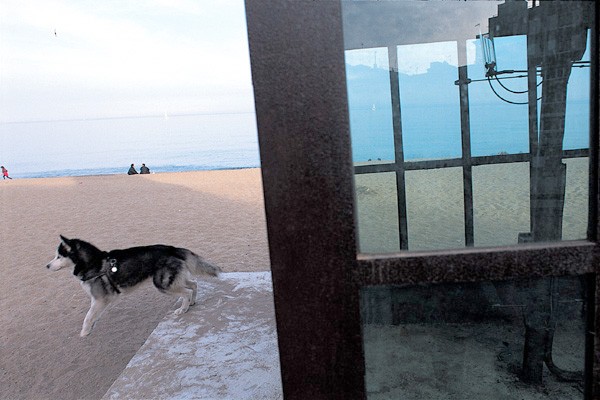
Vladimir Birgus: Barcelona. Chromogenic print, 11-3/4 x 17-7/8 in. (298 x 454 mm), 2000/2008, unmounted. Signed, titled, dated and editioned. Available in 12 x 18 in. edition of 20, plus A.P., starting at $1,250; and 30 x 40 in. edition of 10, plus A.P., starting at $3,000.
"In April 1990, the large exhibition of Czech and Slovak Photography Today opened in one of the most prestigious art museums in Europe, accompanied by a beautifully printed 168-page catalog. Shortly after the Velvet Revolution in Czechoslovakia, there was enormous interest in it, and we couldn't even respond to offers from various museums. In the end, it was repeated in eight European and two American cities by the end of 1994.
"Such enormous spontaneous interest has never been repeated. But several other exhibitions that I curated or co-curated were also successfully presented at important institutions. For example, the exhibition Modern Beauty. Czech Photographic Avant-Garde 1918-1948, which we prepared with Pierre Bonhomme, was presented in 1998-1999 at the National Museum of Catalan Art (Museu Nacional d"Art de Catalunya) in Barcelona, the Mission du Patrimoine Photographique in Paris, the Musée Elysée in Lausanne, the Prague City Gallery, and the Neue Sammlung in Munich, and a shorter version was shown at the Hungarian House of Photography--Mai Mano House in Budapest. After its premiere at Prague Castle in 2000, the exhibition Nude in Czech Photography was repeated in Paris, Aachen, Bratislava, Athens, and Warsaw. Over 300,000 visitors saw it at the Manezh in Moscow–but mainly because a retrospective of Annie Leibovitz was being held in the same building for the same admission price. Together with Jan Mlčoch, curator of the Museum of Decorative Arts in Prague, we prepared a huge exhibition with more than 1,300 exhibits, Czech Photography of the 20th Century, which was displayed in three buildings in 2005 and reprised in a smaller version four years later at the Bundeskunsthalle in Bonn.
"Lately, it has become really difficult to get the work of Czech photographers into the programs of major photography festivals and important museums in Western Europe or the US. For example, the Rencontres d'Arles festival only very sporadically exhibits work from Central and Eastern Europe, paying much more attention to photography from Western Europe, the USA, Africa, Asia, or Latin America. I think this is a great pity, because there are many high-quality works being created in contemporary Czech, Polish, Slovak and Hungarian photography. However, we are partly to blame for this lack of interest, because in Czechia, for example, we do not have many adequate partners for the most important Western exhibition institutions, and cooperation based purely on personal contacts between a few curators no longer works very well. For example, the National Gallery in Prague does not yet collect classical photography, and neither Sudek nor Koudelka are represented in its permanent exhibitions of Czech art. Something like this is unimaginable at the Museum of Modern Art in New York, the Pompidou Center in Paris, the Tate Modern in London, and other museums with important collections of modern and contemporary art."
What is the international interest in Czech photography today?
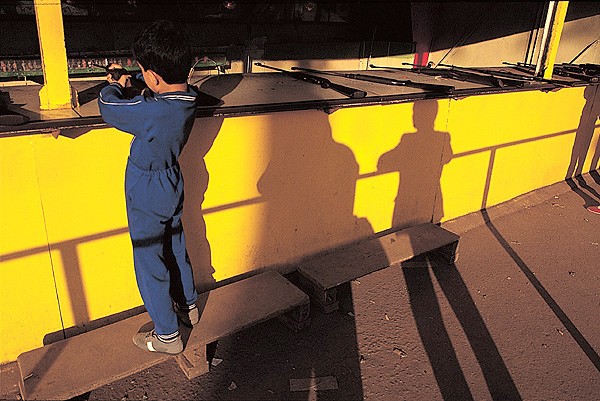
Vladimir Birgus: Moscow, Russia. Chromogenic print, 11-3/4 x 17-7/8 in. (298 x 454 mm), 2000/2008, unmounted. Signed, titled, dated and editioned. Available in 12 x 18 in. edition of 20, plus A.P., starting at $1,250; and 30 x 40 in. edition of 10, plus A.P., starting at $3,000.
"Of course, there is still interest mainly in the works of the classics of modern Czech photography, František Drtikol, Josef Sudek, Jaromír Funke, and Jaroslav Rössler. Their best works fetch high prices– or example, the Berlin gallery Kicken once sold Drtikol's famous photograph Vlna (Wave) for half a million euros at the Art Basel fair, and another version of this photograph, which was in the collection of actor Richard Gere, found a buyer at Christie's auction in New York in March 2022 for $324,000. Funke's vintage print from the 1929 series Abstract Photo was auctioned at Sotheby's in New York in April 2011 for $350,500. Sudek's Still Life from 1952, made using the carbon print technique, was sold at Sotheby's in Paris for €300,750. Of the living Czech artists, Josef Koudelka is the most internationally renowned, with his photographs selling at Paris Photo for between €10,000 and €50,000. His portfolio of photographs from the Gypsies series, published in 1989 in a limited edition of six, fetched $283,800 at last year's Phillips auction in New York.
"However, these are truly exceptional prices for exceptionally high-quality works. Less important works by these artists are available for significantly lower prices. In addition to Koudelka"s photographs, the works of Antonín Kratochvíl, Jindřich Štreit, Jitka Hanzlová, Tono Stano, Michal Macků, Ivan Pinkava, Václav Jirásek and Dita Pepe have also gained international renown."
When did you start selling your work through galleries?
"The first gallery to sell my photographs was the now-defunct Prague House of Photography in the 1990s. Most of the sales were to private buyers. My photographs entered museum collections thanks to offers from the museums themselves, and I donated a number of works to them. For many years now, I have been represented by Alex Novak"s Contemporary Works/Vintage Works in Chalfont, USA, and more recently, also by the Photon Center for Contemporary Photography in Ljubljana."
Where is your biggest market for print sales?
"I have sold most of my photographs in the Czech Republic, both to private collectors and to museums and galleries. But my photographs are also in collections in Slovakia, Germany, the USA, Japan, Great Britain, France, Poland, and other countries. Some sales took place at trade fairs such as Paris Photo, Photo London, Art Market/Art Photo Budapest, and Prague Photo."
What have you been working on lately?
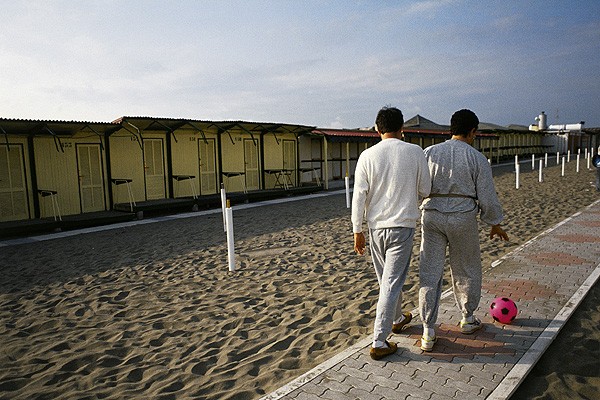
Vladimir Birgus: Lido di Ostia, Italy. Chromogenic print, 11-3/4 x 17-7/8 in. (298 x 454 mm), 1994/2008, unmounted. Signed, titled, dated and editioned. Available in 12 x 18 in. edition of 20, plus A.P., starting at $1,250; and 30 x 40 in. edition of 10, plus A.P., starting at $3,000.
"I continue to take photographs in the style of subjective documentary, prepare exhibitions and write. However, most of my time is taken up by the Institute of Creative Photography at Silesian University in Opava, which I have headed since its founding in 1990. At that time, it was only the third university in the entire post-Soviet bloc, after FAMU in Prague and the Academy of Fine Arts in Leipzig, where it was possible to study photography. Today, there are nine photography departments and studios at various schools in the Czech Republic alone.
"We have gradually managed to build a team of 21 teachers, which includes photographers of various creative backgrounds, nationalities, and generations. We have a very versatile study program. Each student must try out all the main areas of photography in practice, from reportage and documentary to portrait, staged, and advertising photography, to intermedia and conceptual work or the preparation of authorial books. At the end of their bachelor's, master's, and doctoral studies, each student must not only create a portfolio of photographs, but also write a comprehensive thesis on the history and theory of photography. This thesis is then added to libraries and published on our website, https://www.itf.cz along with thousands of student photographs. There is great interest in the program, and only about a third of applicants pass the demanding entrance exams. We currently have over 220 students, not only from the Czech Republic, but also from Slovakia and Poland, and occasionally from other countries. Many of them are highly successful in practice as photographers, teachers, or museum and gallery workers, and some have won various competitions, including World Press Photo, publish books, and organize exhibitions. Until 2005, I managed to teach at the Department of Photography at FAMU in Prague at the same time, but the ever-increasing amount of administration was the main reason why I now only teach in Opava."
In addition to your work as an educator, you have also written extensively, articles as well as books. I have a number of them myself. Are you working on a new book?
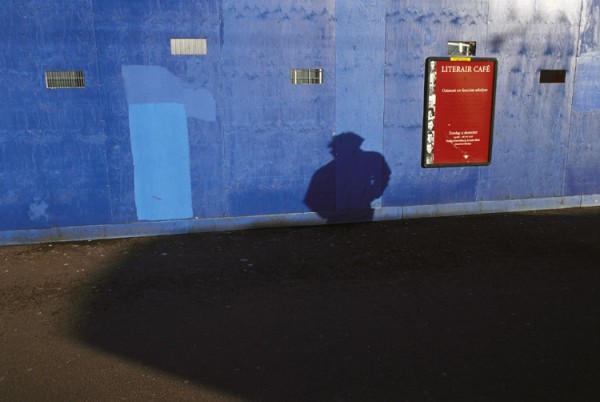
Vladimir Birgus: Amsterdam, Netherlands. Chromogenic print, 11-3/4 x 17-7/8 in. (298 x 454 mm), 2004/2008, unmounted. Signed, titled, dated and editioned. Available in 12 x 18 in. edition of 20, plus A.P., starting at $1,250; and 30 x 40 in. edition of 10, plus A.P., starting at $3,000.
"As an author or co-author, I have gradually managed to publish over 70 books. Several of them are my monographs, but most deal with the history and present of Czech photography. I try to have them published in Czech and English whenever possible. I also try to ensure that the most important ones are distributed internationally. I am always very happy when I discover such publications in bookstores and museum shops in places like New York, Houston, London, Tokyo, or Sydney. We have been most successful with the books Czech Photographic Avant-Garde, 1918–1948 and Jaroslav Rössler: Czech Avant-Garde Photographer, published by the Massachusetts Institute of Technology Press. And what one of the world's best universities publishes is bought by a huge number of libraries around the world. Many foreign curators have told me that it was through these books and the English edition of Czech Photography of the 20th Century that they learned how rich Czech photography is. Or that they had no idea how fundamental a role Rössler, who was previously known only to a small circle of experts, played in the development of abstract and constructivist photography.
“I am currently working on a book of my older and previously unpublished photographs, which was published at the end of March to accompany my solo exhibition at the Hungarian House of Photography--Mai Manó House of Photography in Budapest, which I prepared with Péter Baki. . I am also working on an extensive catalog 35 years of the Institute of Creative Photography at the Silesian University in Opava."
To see and order photographs and books by Vladimir Birgus, go here: https://iphotocentral.com/common/result.php/256/Vladimir+Birgus/0/0/8.
Michael Diemar is editor-in-chief of The Classic, a print and digital magazine about classic photography. In August 2025, he cofounded Vintage Photo Fairs Europe, an organization focused on promoting independent tabletop fairs in Europe and spreading knowledge about classic photography in general. He is a long-time writer about the photography scene, writing extensively for several Scandinavian photography publications, as well as for the E-Photo Newsletter and I Photo Central.
MIA Photo Fair BNP Faribas: Milan’s Photo Fair Undergoes Metamorphosis
Interview: Ettore Molinario, Italian Collector with a Live-in Museum
Interview: Vladimír Birgus, Czech Photographer and Photohistorian
Noted 19th-century Photo Dealer and Expert Robert Hershkowitz Passes away
Make an Appointment with Us during AIPAD
Met Museum of Art Appoints Oluremi C. Onabanjo as Photography Curator
Book Review: PAPER PRINTERS PRINTING – Photographs from the Collection of Barry Singer


Share This